YHC's Top Tips
Why Equine Hydrotherapy Is a Winter Game-Changer for Keeping Horses Fit, Sound and Sane
Winter is one of the most difficult times of year to keep horses both physically fit and mentally settled. Frozen or waterlogged ground limits turnout and hacking, daylight hours shrink, and many arenas become either deep, slippery, or unforgiving. At the same time, horses do not suddenly stop needing exercise just because the weather has changed. Muscles, joints, tendons, and cardiovascular systems all require consistent, progressive work to stay healthy. Without it, horses come into spring weaker, stiffer, and far more prone to injury.
This is where equine hydrotherapy comes into its own. When weather, footing and safety concerns restrict traditional ridden exercise, water-based training offers a way to keep horses moving, strengthening, and conditioning in a controlled, low-risk environment.
Water has remarkable physical properties that make it ideal for winter training. The buoyancy reduces the amount of weight carried through the limbs, meaning joints, tendons and hooves are protected from excessive concussion. At the same time, the natural resistance of water makes every step more demanding for the muscles. A horse walking in water is working significantly harder than one walking on dry land, yet without the pounding associated with frozen or hard surfaces. Hydrostatic pressure also helps support circulation and reduce swelling, which is especially valuable in wintry conditions when joints and soft tissues tend to stiffen.

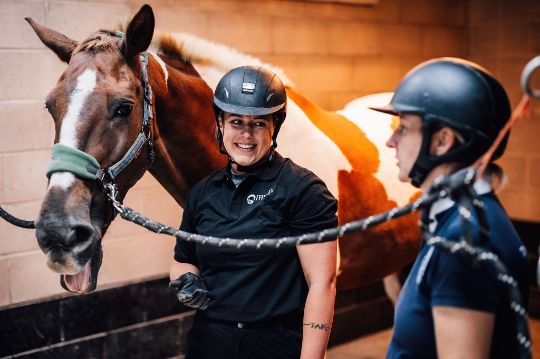
Winter also brings a behavioural challenge. Reduced turnout, less hacking, and repetitive schooling lead many horses to become fresh, sharp, or mentally flat. Some turn explosive, while others become sour and resistant. Hydrotherapy offers both physical and mental relief. Working in water requires concentration, balance, and rhythm, which naturally encourages calm, focused movement. Many horses come out of their sessions pleasantly tired and far more settled, making them easier and safer to handle and ride afterwards. For horses that are difficult or dangerous to exercise in winter, hydrotherapy provides a vital outlet for pent-up energy.
Mental wellbeing is just as important as physical conditioning. Endless circles in the school can be deeply monotonous, particularly for intelligent or sensitive horses. Water-based exercise introduces variety and novelty, stimulating the horse’s brain as well as its body. This helps prevent boredom, frustration and the training issues that so often appear during long winter months.
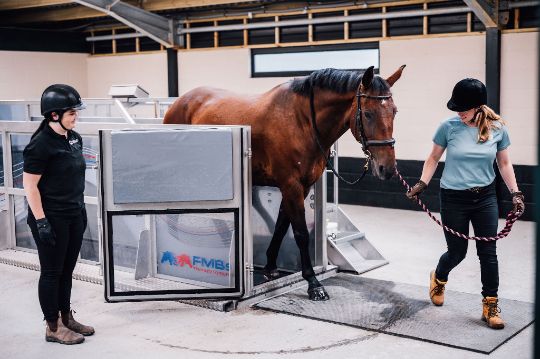
Grace Nattrass, Equine Physiotherapist and Hydrotherapists